
NOTICE
New Developments
Noise profiles for PictureCode’s Noise Ninja
are now available for download here
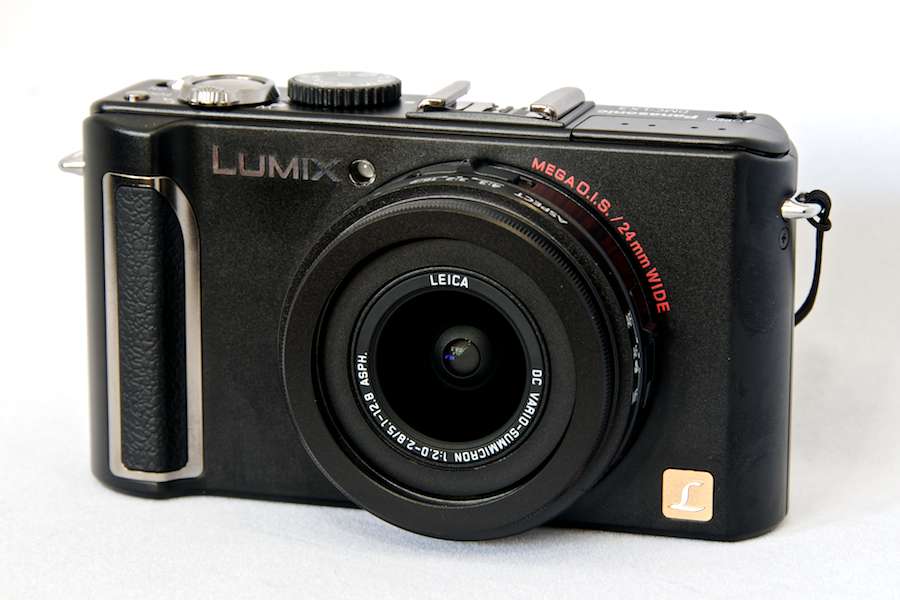
Classy Retro Feel!
I just got my Lumix LX3 a few days ago and I’m lovin’ it! Having just purchased a Sony W120 a few weeks before, I’m sure you can think of a bunch of questions; Why upgrade? Why Panasonic? etc. etc. I’ll be discussing that as well as talk about my experience with the LX3 thus far.[2]: http://www.nargalzius.com/gallery/set.php?/72157600055007506 “view tour pictures”
Backstory
Cris and I bought a matching pair of Sony W120s for two reasons; one was that she wanted a nice cheap and digital camera, and I wanted to have a normal everyday camera na panlaspag.
While I’m a Nikon DSLR user (D300), when it came to point and shoots – I was always partial to Sony Cybershots. Perhaps the fact that my very first digital camera was a Cybershot… and that same camera, which after using on a [US Tour][2], made me want to get more serious 1 As a hobbyist of course about photography.
So after doing some research for Cris, I decided “hey, this camera I chose for her seemed to have the specs I want.” And as a bonus it was within her budget; which meant that for me, it was _dirt cheap!
One thing lead to another, and I found myself searching for a camera again – and ultimately sourcing one which as of this posting (as far as I know), isn’t even officially in stores yet. 2 Online shops (e.g. Amazon, Adorama, B&H etc.) as of this posting allow you to pre-order the unit. In fairness, it’s slated for release this month.
Why Panasonic? Why the Lumix LX3
The LX3 is the flagship product of Panasonic’s compact camera line. 3 Which honestly, isn’t really compact at all, but I forgive them. And one of the reasons I’d have to say I considered getting it is because, they seemed to be one of the brands that “gets it” (at least as far as their flagship models go).
Allow me to digress a bit. My primary purpose of switching to a Nikon system (from Canon) wasn’t because of technology. Deep down, I think that Canon, from a purely engineering standpoint, probably has the better technology if push came to shove. But to me, the reason why Nikon pulls at the heartstrings of a lot of photographers is because they “get it.” from the layout of their controls to the “features” they throw in their different DSLR lines, you can only surmise that the people behind the brand, are more photographers than engineers – whereas Canon people are probably the inverse. 4 But of course both are excellent at BOTH fields.
Having said that, here are a few factoids on the Lumix which I’ve gleaned while scouring the web.
Megapixel myth: Quality vs Quantity
I won’t bother expounding on this since you’ve got Google to learn more about this topic. But DPR summarized it quite nicely nonetheless:
The old formula equating pixel count with image quality does not always hold true. In general, if two CCDs have exactly the same physical size but different pixel counts, the one with more pixels is not necessarily better – in fact, it’s likely to generate more picture noise, especially in low-light parts of the image. This poor low-light image quality has been a source of great dissatisfaction for compact camera users.
The undisputed king of compact, low light digital photography is the legendary Fuji FinePix F30. That’s a discontinued/obsolete 6MP camera from 2 years ago. To this day, it still remains the camera (of its class) to beat in low-light/high ISO performance. I guess this underscores the fact how important the ratio between sensor and MP is for getting the best quality.
Low Light / High ISO – Where it really matters (for me)
I’m going out on a limb and make a generalization: When the light is good, I honestly think there will be little difference between any decently made point and shoot. 5 This is talking about normal usage of course, no artsy artsy stuff that requires more controls/functions. So whether or not you’re using a Canon, Nikon, Sony, whatever; if you have good light, your shots will be exposed with the best quality possible.
Low light scenarios however is the frontier where all the flaws of your sensor will be exposed. Those [tour pics][2] are cleaner than the ones I had of a recent concert with Basil Valdez – where most if not all photos were set at ISO 1600 – which were taken with a Sony Cybershot as well.
And you might have noticed by now, I like low light – I try to avoid flash when I could. So seeing those concert pictures really made me re-evaluate my preferences in a compact point and shoot. And I stumbled upon the LX3 specs and the implications these specs got my attention:
- Still the same MP count from it’s predecessor This implies they focused on improving the sensor instead of upping the MP count. Good.
- Increased the sensor size Even better! Not only did they improve the sensor, but they gave it more room to work with. Very good.
- Rearranged components That, and the fact that when you look at the camera, you know it has a lot of breathing room compared to the ultra-compacts. Just like how DSLRs benefit from their big bodies 6 More room equals more space equals less heat equals less noise. This is why I forgive them for making a rather bulky device and call it “compact.”
- Leica f2.0 Summicron lens Truth be told, I’m not that particular about it being a Leica lens or not. Partly because we already have another Lumix (my sister uses it) which we were tricked into buying – sufficed to say I wasn’t impressed. What does catch my attention is that it’s f2.0! This is the widest aperture I’ve seen on a compact camera. With, f2.8 on maximum zoom (granted it’s just 2.5x, but still), this probably constitutes as a true “fast lens” – and it’s on a compact point and shoot to boot! And we all know the wider your aperture, the easier you can go with ISO settings to achieve ideal [stop motion] shutter speeds – and the lovely bokeh that comes with it.
Those points alone compelled me to choose the LX3. And now that I have it, I have to say it doesn’t disappoint! In fact there were a lot of pleasant surprises that I discovered while using it. I’ll discuss them in a while, but for now, lets go back and wrap up the whole low light, high ISO topic; I chose the dirtiest low light photo I got on the LX3 and compared it to one of the “dirty” pictures from the concert practice. 7 Both were set at ISO 1600

Lumix LX3, ISO 1600, NR -2

Cybershot W120, ISO 1600, NR always on
A couple of things. First and foremost, you should interpret the quality of these photos in the context of which they were taken in. These are set at ISO 1600, so they still are and always will be noisy/dirty. But notice how more “legible” (for lack of a better term) the LX3 shot is – and I haven’t used noise-ninja on it yet.
NR is noise reduction; the LX3 has 5 levels (-2, -1, default, 1, 2) I’m guessing the lower it is, the less NR is applied – so I just set it to the lowest just for kicks. The Cybershot on the other hand has NR forever on when you’re on high ISOs – which really sucks balls since you can see how it smears the pictures and makes them look like watercolor paintings.
Also, it’s worth mentioning that I had less light available when I took the LX3 shot; and that the LX3 wasn’t operating in full 10MP resolution (I set it to 7MP) – if it were, then sizing it down would probably clean up the photo even more. The Cybershot photo is at 7MP as well (full res) so they both were scaled down at the same rate, but you can see how different the final images are.
The other niceties
I’ve already said that I was after low light performance, and the Lumix’s specs in that area seemed to fit the bill, everything else would’ve just been icing on the cake – but lemme tell you, is the icing ever so sweet!
To me, the “accessibility” of this camera gave me the same sort of feeling when I switched to Nikon form Canon on the DSLR side; how even the advanced functions of the unit are immediately accessible:

I suggest you visit this image’s
page in the gallery to see the
notes I put on the picture as
to how intuitive the LX3 is
Manually assignable focus point.
So assuming your AF focusing type is a fixed area (usually the center) there’s a button immediately allows you to move the focus area freely. If you you know why DSLRs have multiple selectable focus points, this basically lets you do the same thing to serve the same purpose.
Focus: Normal, Macro, Full Manual
Speaking of focusing, being able to do full manual focusing on the LX3 is a big plus. It basically zooms the selected focus area so you can get an idea if you’re properly focused. Then of course there’s the macro setting which allows you to take pics from as close as 1cm.
I love how you just flip a switch instead of dig down menus to toggle between these modes.
Assignable Fn button
Yep, just like in the DSLRs, there’s a Function Button (Fn) you can assign to anything (well not anything, but you get the picture). I personally set it to AF focusing type (multi area, motion tracking, narrow area, face detection, etc.)
RAW output
Different brands have their own respective RAW formats, but the goal is the same across the board; to provide the users the counterpart of a “negative” in the digital domain. RAW files are lossless 8 Whereas the standard JPG is a lossy compression and [should] represent exactly how the sensor recorded your data before applying any in camera adjustments (e.g. white balance, saturation, sharepening, etc)
This is usually a standard output option with DSLRs, but very few (if any) compact cameras offer it. Just like with the f2.0 lens, I think the LX3 is the first [of its class] to offer this kind of feature.
Yadda Yadda
You know what, at the rate I’m listing down the features, I might as end up just listing them all… so let me just say this: This camera probably is as manual as a compact could get. You practically have control over every aspect of your shot as you would with a manual SLR – and it does it very well.
Cons
Of course I still do have my complaints:
-
Bulky – lens (which doesn’t fully contract) is the same depth as the body, so whatever dimensions they’re advertising – it’s actually double. And I don’t like the fact that it’s got a lens cap instead of having some mechanism to protect the lens when not in use.
-
Tripod hole is not centered, it is close to the lens though (where the weight really is) but still, this would probably be stable on real tripods, not those little compact ones. I’m planning to get a Gorillapod soon so I’ll see how it does when I get it.
-
I wish there was a fast way to engage disengage the anti-shake engine, it’s good for handheld, but it can be a pain when using a tripod with it.
- No viewfinder – it would be nice to have the option of saving battery life and just go oldschool by looking through a viewfinder. This is especially important when you’re trying to take a picture in a really dark place (like a club or something) where the LCD can’t register properly – how the hell are you supposed to compose the shot when you can’t see a damn thing right? Real eyes certainly would come in handy. You can purchase an external viewfinder, but that’d look awkward (plus I don’t know how much it’ll cost just for that)
Also, I would have to admit that I haven’t really checked out its “counterparts” in different brands – which probably are similarly awesome. So I’ll just take some reviewer’s word for it:
In summary the new Panasonic Lumix DMC-LX3 certainly fulfills its remit of being a premium system camera which challenges the likes of the Ricoh GR and GX series cameras, the Canon Powershot G9 and the Sigma DP1.
As for me, I’m just happy that I’ve finally got a practical camera, which can perform well enough for me to do everyday shooting without thinking “How I wish I had my DSLR right now.”
Notes
| ⇡1 | As a hobbyist of course |
|---|---|
| ⇡2 | Online shops (e.g. Amazon, Adorama, B&H etc.) as of this posting allow you to pre-order the unit. In fairness, it’s slated for release this month. |
| ⇡3 | Which honestly, isn’t really compact at all, but I forgive them. |
| ⇡4 | But of course both are excellent at BOTH fields. |
| ⇡5 | This is talking about normal usage of course, no artsy artsy stuff that requires more controls/functions. |
| ⇡6 | More room equals more space equals less heat equals less noise. |
| ⇡7 | Both were set at ISO 1600 |
| ⇡8 | Whereas the standard JPG is a lossy compression |
Hmm… i got a leica d-lux 3 and it’s more or less the same as the panasonic lumix you’ve got… but i’m pretty disappointed with the leica – while it’s got a gorgeous display and very simple, easy settings, the color quality is, well, medyo ngek. or maybe i’m not using the settings properly? hmm.. how much did you buy your lumix for?
Ey Jeline!
The only explanation I can think of would be this bit of info on the D-LUX 3 (taken from DPR):
This seems to be the case for all Leica models. Though, honestly, I don’t think it should be a problem.
Do you have any samples of the “bad color” you’re describing?
Got the Lumix for about $500
just wondering where you got your LX3, if you were able to find some store selling it here.
with regards to jeline’s comment – i have the LX2 and sooc output is somewhat so-so, i enjoy post-processing though, so it’s ok.
can’t wait to get an LX3.
Hi Azoomer,
Thanks for the visit. I guess from what you’re saying, the LX2 based series might not be so hot on the color logic side. I understand and agree about the post-processing part; it’s usually a trivial issue when you post process.
For regular users like Jeline, however it may be a legitimate issue since they just probably post straight out of the camera.
The LX3 seems to handle color much better, I find myself simply punching up the contrast/levels more than anything else – very minimal (ifg any) color tweaking unless I’m going after a specific effect.
//
To answer your first question, I got it from Hong Kong. I don’t think it’s out in the Philippines yet (I’m assuming you’re referring to Philippine stores right?)
aah, HK… oh well…
as for jeline – dlux4 is coming out soon and from the samples, lx3 manages color better than lx2, less color-bleed, etc. hehe, kaso it’s almost 2x as expensive than lx3
thanks!
Wow, double the price for basically the same thing (since DLUXes are rebranded OEMs of Lumixes).
Despite the DLUXes having the same hardware components, they do tweak their processing to standards unique to Leica. That should count for something right?
But if you ask me, the differences between the two can easily be compensated by adjusting the saturation within the camera (or post processing)… that really leaves you with the actual look and full branding.
In fairness to Leica, their cosmetic tweaks to the casing are really nice – the DLUX3, cosmetically speaking, looks infinitely better than the LX2 – I can just imagine how cool the DLUX4 would look like.
Hi Carlo! Nice review you have here about the lx3. I’m actually on the verge of getting myself one. It’s just that I’m trying very hard not to until the end of Photokina when all new Digicams are out for the holidays.
Am closely monitoring updates on the upcoming Canon G10 and the Nikon P6000. You think these new cams will give the LX3 a run for it’s money? 🙂
The problem I have with the Nikon equivalent is that the RAW formats are tied to Microsoft, while I’m not sure the exact implications, it makes me feel uncomfortable.
As for the G10, I guess if you’re looking for the versatility (e.g. zoom, etc.) the G10 would probably be a better choice.
The thing that the LX3 has going for it however is the Leica lens, whether it be the psychological brand hype or a measurable amount in quality, it does seem to deliver pictures a lot of people like. And on a purely psychological note, I really dig the LX3’s physical characteristics because it looks like a classic camera – I don’t know, but that matters to me hehehe.
hi carlo.
my question is a little OT. i got a sony t20 last year and im very disappointed when it comes to low light and a little distant shots. im not into photography so im really not that knowleadgable when it comes to dslr. i just want a digicam that could give me clear shots even on far and low light shot. could this lx3 be the anwer? thanks. 🙂
@Anna,
It would depend on your “threshold” for acceptable low-light noise. Your disappointment, just like mine is because of the poor high ISO performance of the Sonys.
It’s worth saying that the reason I got the LX3 is precisely because of the same issue you’re mentioning here.
Actually given this blog post, I’m surprised you had to ask this question – the section with the “Low Light / High ISO – Where it really matters (for me)” header discusses exactly that.
sorry for asking.
Hahaha. No I should apologize. I didn’t mean to sound snobbish.
To restate my answer; Yes, I believe the LX3 will solve your woes – because it did mine; and we seem to both have the exact same concerns as a basis for considering the camera.
Hope this helps 😉
A nice mini-review of the LX3. I have had mine for a month now, with almost 7000 photos taken.
I’m wondering what kind of external viewfinders are compatible with the LX3 – the Panasonic one is quite expensive, and then there is a Voigtlander 25 mm which could be nice. But are there other alternatives?